
Roof Ventilation Guides, Solar Roof Ventilation Guides
Roof Heat Bothering You?
Does your home become uncomfortable as the afternoon heats up? Perhaps the air conditioner…
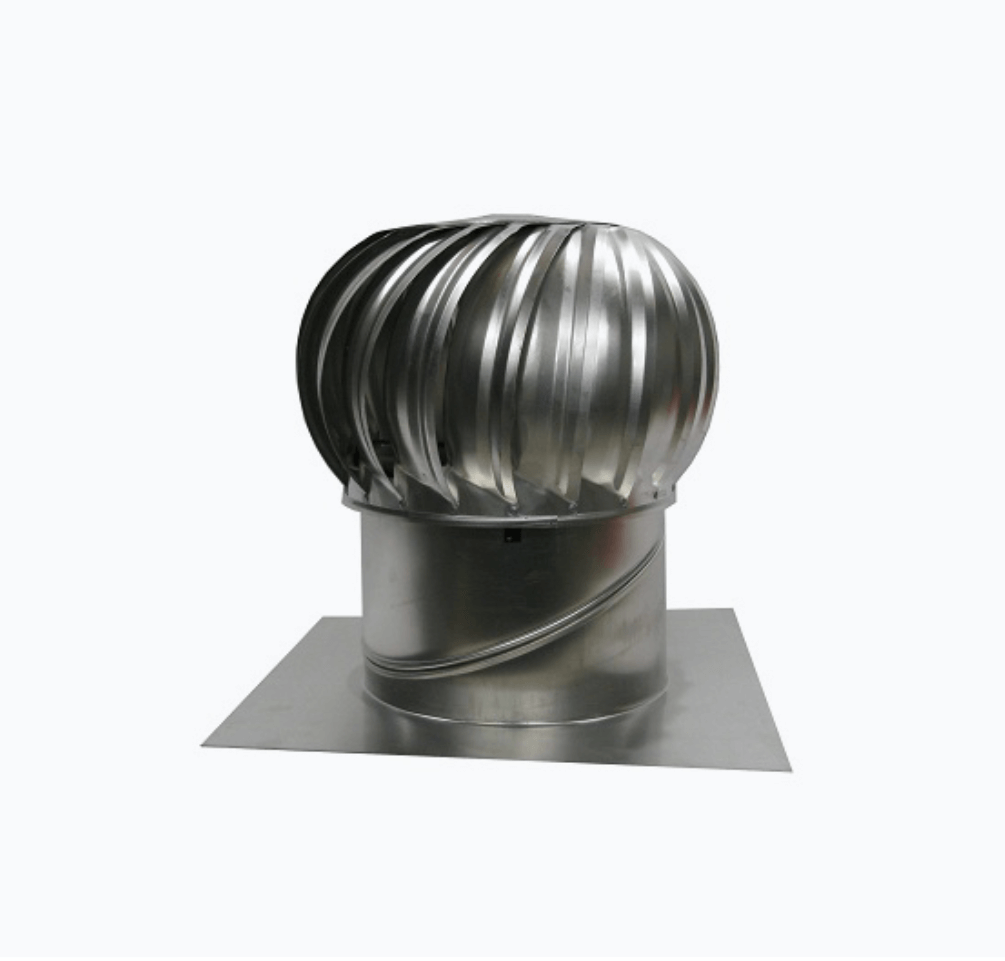
Whirlybirds have been used on Australian roofs for many years. They are a simple type of roof ventilation system designed to help hot air escape from the roof cavity.
They work when wind spins the turbine on top of the roof. As it spins, it draws warm air out of the roof space. This can help reduce heat build-up in the ceiling area, especially during warmer months.
Whirlybirds can be a suitable option for basic roof ventilation.
They are often used when you want a simple, low-cost way to release some hot air from your roof cavity. They do not use electricity and can be installed on many roof types.
For smaller homes or less demanding spaces, a whirlybird may offer some benefit. But if your roof space gets very hot, or you want more active airflow, solar roof ventilation is usually a stronger choice.
Whirlybirds can help with basic roof ventilation, but they do have limits. If your home gets very hot or your roof space needs stronger airflow, a standard whirlybird may not be enough.
Whirlybirds need wind to work well. On still, hot days, they may not spin enough to move much air.
A whirlybird is a passive ventilation system. It does not actively pull air out like a powered fan, so airflow can be limited.
Larger roof spaces often need multiple whirlybirds to make a noticeable difference.
Most standard whirlybirds do not automatically turn on or off based on roof temperature.
On very hot days, when you need ventilation the most, whirlybirds may not provide enough airflow.
Over time, some whirlybirds can rattle, squeak or stop spinning properly.
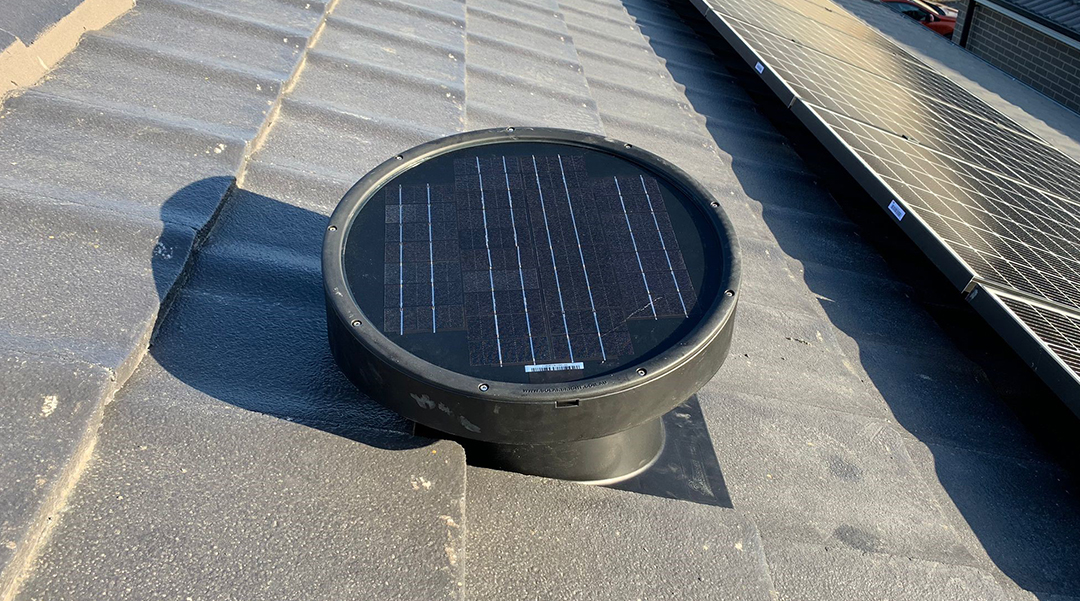
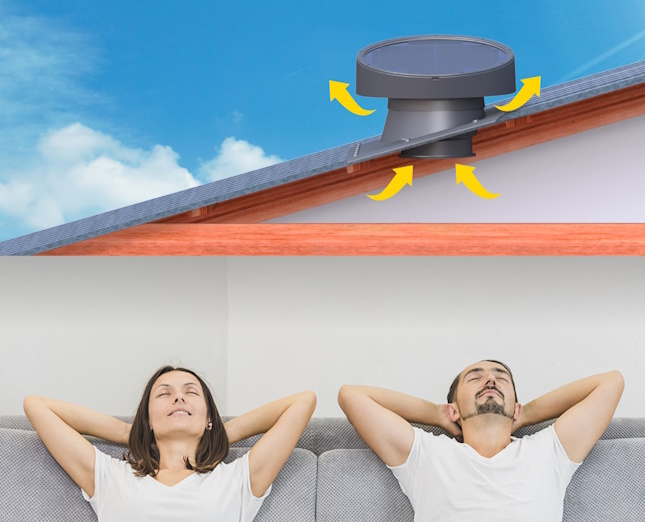
Solar roof ventilation uses a solar-powered fan to actively remove hot air from your roof cavity.
Instead of waiting for wind, the system uses sunlight to power the fan. When the sun is strong and your roof heats up, the fan works to extract trapped heat. This helps lower roof cavity temperatures and can make your home feel more comfortable.
Solar roof ventilation is a smart upgrade for homes that struggle with heat build-up, poor airflow or high indoor temperatures during summer.
Solar roof ventilation gives you a more active way to remove heat from your roof cavity. It is designed to work when the sun is out and your roof space is heating up the most.
Solar roof ventilators use a fan to actively pull hot air out of the roof space. This gives stronger airflow than a standard whirlybird.
The fan is powered by solar energy, so it does not rely on mains electricity during the day.
By removing hot air from the roof cavity, solar roof ventilation can help reduce heat transfer into your living areas.
A cooler roof space can help make your home feel more comfortable, especially during hot Australian summers.
When the roof cavity is cooler, your air conditioning system may not need to work as hard.
Because the system is solar powered, it is designed to run with little to no ongoing energy cost during the day.
Some solar roof ventilators include thermostat control, remote control and day/night operation depending on the model.
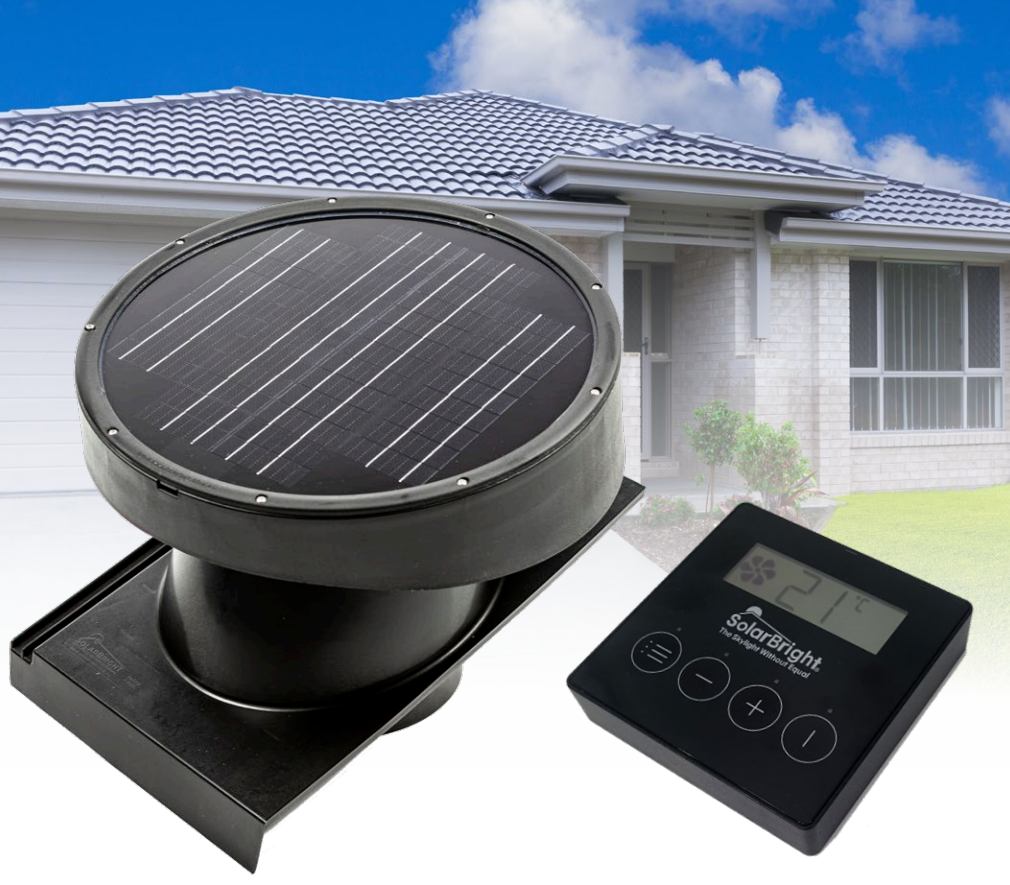
MaxBreeze Solar Roof Ventilation is designed to extract hot, trapped air from your roof cavity using solar energy. It is a practical upgrade for homes where passive ventilation is not doing enough.
Unlike a standard whirlybird, MaxBreeze uses a solar-powered fan to actively ventilate your roof space when heat builds up. This makes it a strong option for Australian homes, especially in warm and humid areas where roof cavities can become extremely hot.
It is ideal for homeowners looking for a simple, efficient and low-running-cost way to improve roof ventilation.
MaxBreeze solar roof vetnilators by SolarBright is a smart option for homeowners looking for better roof ventilation than a standard whirlybird. It combines solar power, strong airflow and smart control features to help keep your roof space cooler.
MaxBreeze is Australian designed for local roof conditions. It is made for homes that deal with strong summer heat and changing weather.
MaxBreeze is thermostat controlled solar roof ventilation. The fan can automatically start when the roof cavity reaches the set temperature, helping remove heat when it matters most.
MaxBreeze Plus models can offer day and night ventilation. This gives you extra flexibility when you want airflow beyond daylight hours.
MaxBreeze Plus models also include remote control operation. This makes it easier to manage your roof ventilation when needed.
MaxBreeze can be installed on a wide range of roof types. This makes it a flexible option for many Australian homes.
MaxBreeze is designed for straightforward installation. Depending on your roof and setup, it can be a quick install option and may also suit DIY installation.
If your whirlybird is not doing enough, it may be time to upgrade.
Get in touch with our team today. We can help you choose the right MaxBreeze Solar Roof Ventilation system for your home.
Book your free consultation and start working towards a cooler, more comfortable home.

MaxBreeze can move over 20 times more air than whirly-birds. Australian Owned & Designed solar roof ventilators.
Find out more
MaxBreeze can move over 20 times more air than whirly-birds. Australian Owned & Designed solar roof ventilators.
Find out more
Take a Look
Roof Ventilation Guides, Solar Roof Ventilation Guides
Does your home become uncomfortable as the afternoon heats up? Perhaps the air conditioner…
Solar Battery Guides, Solar and Battery Packages Guides, NSW Solar Rebates and Incentives
If you’re in the market for a solar battery, solar system, or solar and…
SolarBright Guides, Roof Ventilation Guides
Mould is a common problem in Australian homes, particularly where moisture, humidity and poor…