Skylights Guides, Tubular Skylight Guides, Solar Skylight Guides
What size skylight does your room need?
Choosing a skylight involves more than matching a fitting to your room’s floor area.…
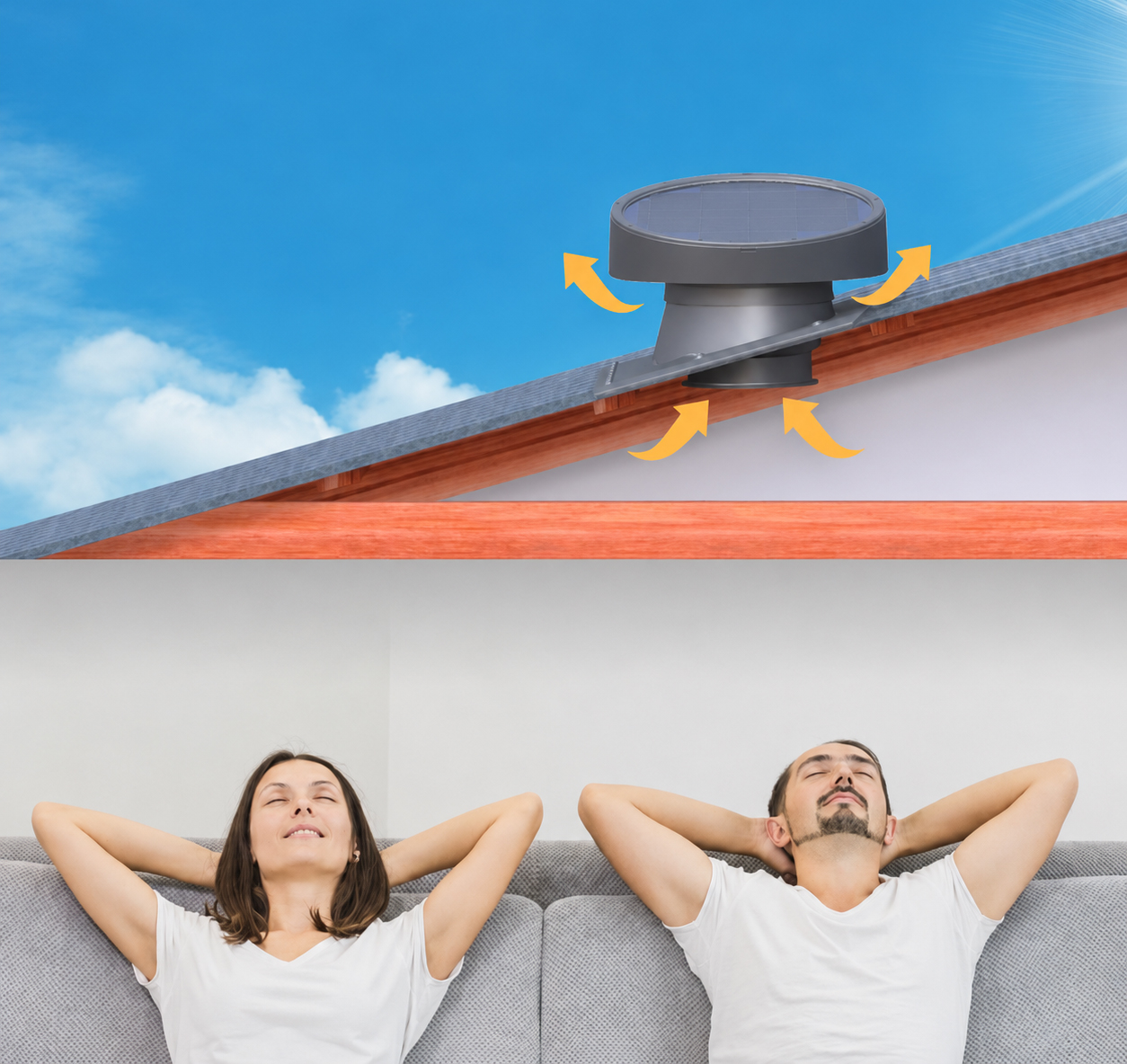
Yes, solar roof vents really work. They use solar energy to power a fan that extracts hot air from your roof cavity. When correctly selected and installed with adequate intake airflow, they help reduce heat build-up above your ceiling and limit heat transfer into your home.
Australian summers can put your home under serious heat stress. While the sun heats your roof, hot air builds up in the cavity underneath. This can increase the heat entering your living areas and add to the work your air conditioner needs to do.
Whirlybirds are a familiar way to ventilate a roof, but their airflow depends on wind and natural pressure differences. For homeowners wanting active extraction on sunny, still days, solar roof ventilation offers a practical advantage.
SolarBright’s MaxBreeze combines a solar-powered fan with automatic thermostat control. With quiet operation and day-and-night options available, it offers a smarter way to manage heat in your roof space.
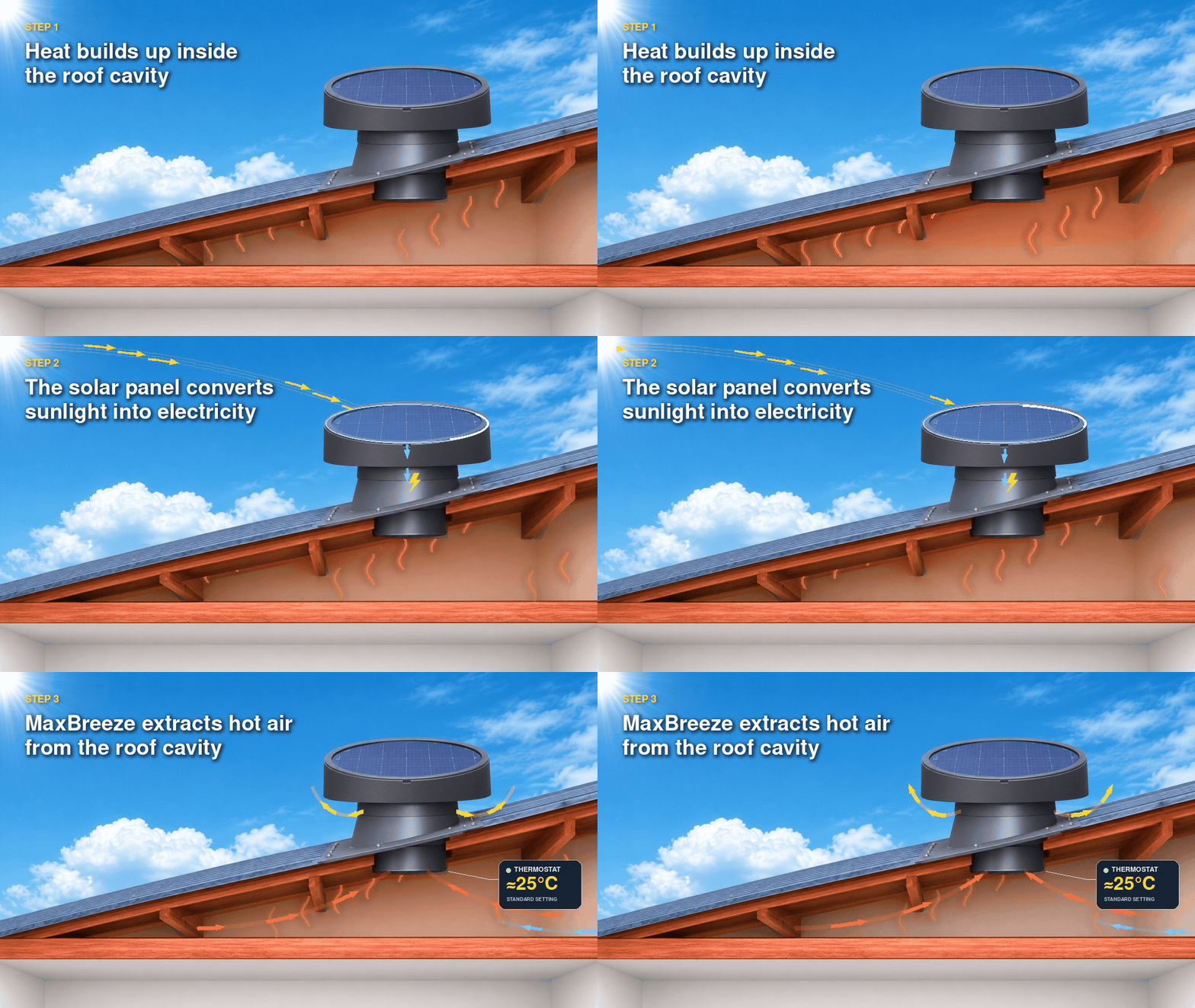
MaxBreeze brings together solar power, a motor-driven fan and a thermostat that responds to the temperature inside your roof cavity. Here is how the process works in four steps.
Step 1: Heat builds up inside the roof cavity
During warm weather, sunlight heats your roof and the space underneath it. Without enough ventilation, the roof cavity can become considerably hotter than the outdoor air.
Step 2: The solar panel converts sunlight into electricity
MaxBreeze’s dedicated solar panel converts sunlight into electricity to power the fan motor. This gives the system its own source of daytime power, so you do not need an existing rooftop solar installation.
Step 3: MaxBreeze extracts hot air from the roof cavity
The thermostat senses the roof-space temperature. With the standard setting, the fan activates when the temperature reaches approximately 25°C, provided sufficient power is available.
The fan then draws hot air out of the roof cavity and releases it outside. As this air leaves, replacement outdoor air enters through suitable intake openings, such as eave vents.
MaxBreeze PLUS models offer adjustable thermostat settings, giving you more control through the remote.
The thermostat setting determines when the fan operates. The temperature achieved in the roof cavity and rooms below also depends on outdoor conditions, insulation, roof design and airflow.
A hot day does not always bring a cooling breeze. This is where MaxBreeze has a clear advantage over ventilation that relies on wind.
Its solar-powered motor actively drives the fan when sunlight and operating conditions allow. That makes it a practical choice for extracting roof-space heat during sunny weather, even when the air outside is still.
The built-in thermostat helps match fan operation to heat in the roof cavity. Once installed and set up, the system responds automatically as conditions change.
For greater flexibility, the PLUS range adds adjustable controls. These models also offer a humidistat that can trigger ventilation in response to excess roof-space humidity.
MaxBreeze uses a brushless DC motor designed for quiet operation. It helps keep air moving through the roof space while working discreetly above your ceiling.
For homeowners who want effective ventilation without adding a noisy appliance, low-noise operation is an important part of the package.
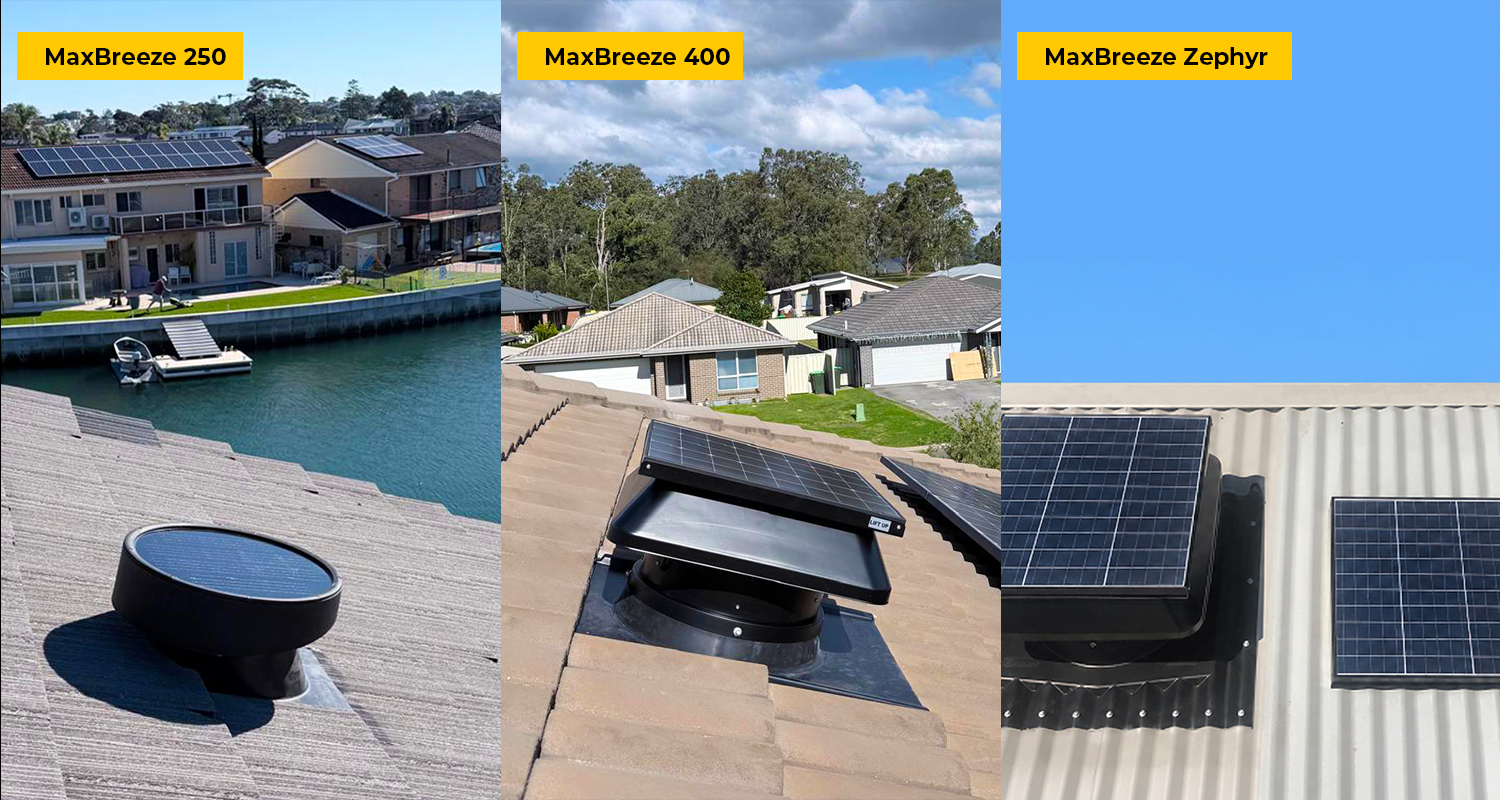
MaxBreeze provides active extraction through a motor-driven fan, with different capacities to suit different roof spaces.
The MB250 offers approximately 800m³/h peak airflow, while the larger MB400 offers approximately 2,200m³/h under optimum power conditions. Actual installed airflow depends on the power available and restrictions within the ventilation system.
Our team can help match the fan capacity and number of units to your roof size, layout and intake ventilation.
MaxBreeze can be installed on many tiled and metal roofs using the appropriate flashing and installation method.
Our installers assess roof access, pitch, solar exposure and airflow pathways to identify a suitable position. Correct placement helps the panel receive sunlight and the fan ventilate the intended roof space.
AC-backed configurations also require a suitable mains power supply.
Heat can remain in the roof cavity after the sun goes down. If evening ventilation matters to your household, MaxBreeze offers options beyond daytime solar operation.
Standard MB250: solar-powered daytime ventilation.
MB400 Zephyr: daytime solar operation, with a built-in battery for operation after dark when required and sufficient charge is available.
AC-backed models: selected configurations can use mains electricity to support night-time operation.
Our team can explain which model and power option best suit your requirements.
During direct solar operation, MaxBreeze uses electricity generated by its own panel to power the fan. This avoids drawing grid electricity for that operation.
Battery-equipped models can use stored solar energy after sunset. Where an AC supply powers the fan, household electricity is used during those periods.
You can choose the operating arrangement that balances your ventilation needs with your preference for solar, battery or mains power.
Whirlybirds can provide basic roof ventilation at a lower upfront cost. Their performance varies with wind and natural airflow conditions.
MaxBreeze adds powered extraction and thermostat control, giving homeowners another way to manage hot roof spaces.
| Feature | Whirlybirds | MaxBreeze solar roof ventilation |
| How airflow is created | Wind-driven turbine and natural pressure differences | Motor-driven extraction fan |
| Sunny, still weather | Airflow can be limited by conditions | Fan can operate with sufficient sunlight and the appropriate thermostat setting |
| Temperature control | Typically no thermostat | Automatic thermostat control |
| Adjustable controls | Typically limited | Available with PLUS models |
| Night-time operation | Depends on wind and natural airflow | Battery or AC options, depending on the model |
If your main concern is heat building up on sunny days with little wind, MaxBreeze is a strong upgrade to consider. You gain active extraction, automatic controls and a choice of power options.
The right installation matters as much as the fan itself. A roof ventilator needs a clear path for air to enter, move through the cavity and leave through the fan.
Our assessment considers:
This approach helps ensure the recommendation suits your home and the way its roof space is constructed.
Whether you are replacing a whirlybird or installing roof ventilation for the first time, SolarBright can help you choose the right model and installation.
MaxBreeze can move over 20 times more air than whirly-birds. Australian Owned & Designed solar roof ventilators.
Find out more
MaxBreeze can move over 20 times more air than whirly-birds. Australian Owned & Designed solar roof ventilators.
Find out more
Take a Look
Skylights Guides, Tubular Skylight Guides, Solar Skylight Guides
Choosing a skylight involves more than matching a fitting to your room’s floor area.…
Solar Battery Guides, Solar Panels Guides
Your solar system and battery should work together to suit your household’s electricity usage.…
SolarBright Guides, Solar Battery Guides, SolaX Triple Power Battery Guides
Price, warranty, safety and storage capacity are some of the biggest considerations when buying…