Solar Battery Guides, Solar Panels Guides
Solar system size and battery size
Your solar system and battery should work together to suit your household’s electricity usage.…
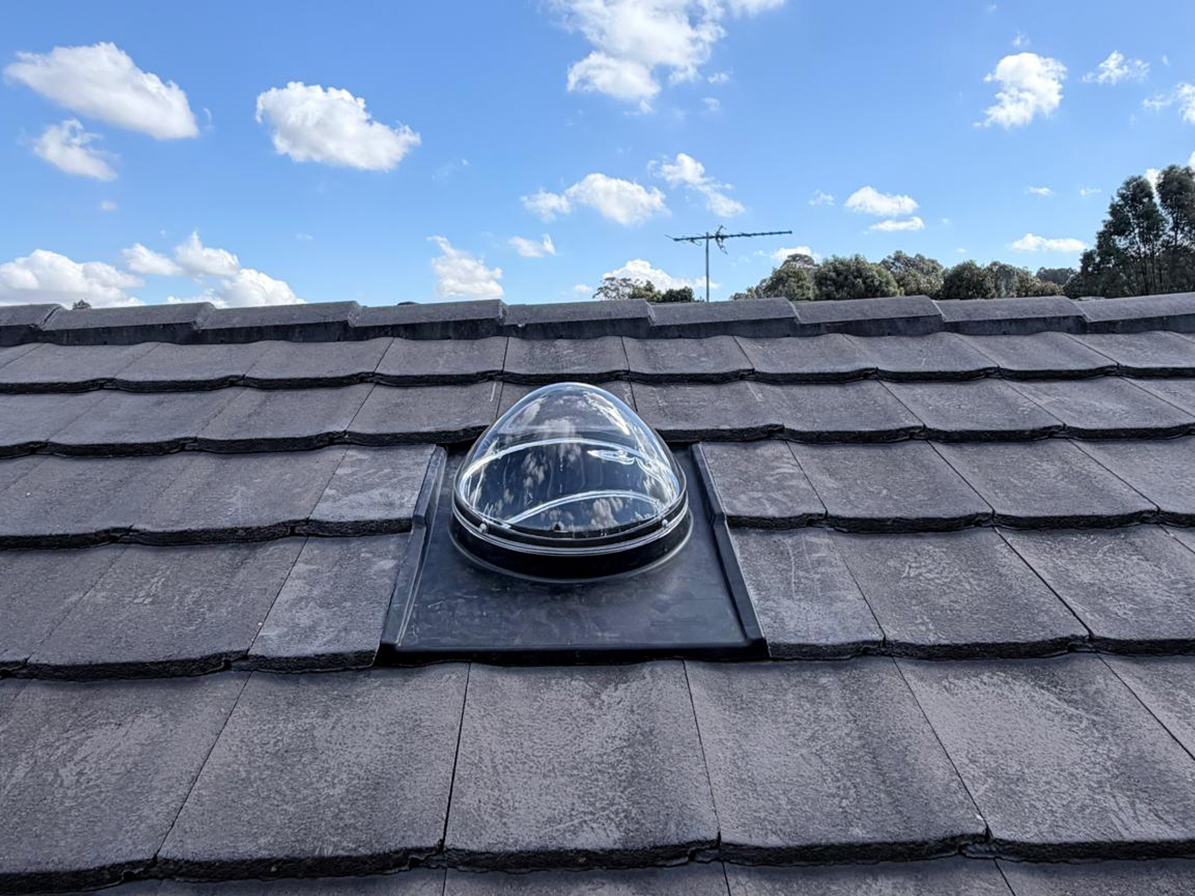
Choosing a skylight involves more than matching a fitting to your room’s floor area. Before deciding on a size, look at how the system will connect the roof to the room below.
For a tubular skylight, the tube’s length, position and route are key factors. Where a suitable tube route is difficult to achieve, a solar LED skylight can offer a more practical solution because the rooftop panel connects to the indoor light through a cable.
At SolarBright, we offer MaxLight ML250, MaxLight ML400 and MaxLight ML550 tubular skylights, alongside MaxLED Standard and MaxLED24 solar skylights. Here is how to choose the right system, size and layout for your home.
A tubular skylight needs a physical connection between its rooftop collector and ceiling diffuser. The position of these two components determines where the tube must run.
Before choosing a MaxLight model, consider:
A shorter, more direct route is a useful design goal. Longer runs and additional bends can affect the amount of daylight delivered, so room size alone cannot determine the right model.
The aim is to find a suitable roof position and tube route that work with your preferred ceiling location.

Choose MaxLight when a suitable tube route is available
Our MaxLight tubular skylights bring actual natural daylight into your room. A rooftop dome collects daylight, reflective tubing carries it through the roof space, and a ceiling diffuser spreads it indoors.
MaxLight is a strong choice when the collector can receive good daylight and the tube can reach the desired ceiling position through a practical route.
The final recommendation should account for tube length, bends, room dimensions and the light you want. A longer tube run may still suit MaxLight when the selected model and complete route are appropriate.
Choose MaxLED when a tube route is impractical
Our MaxLED solar skylights are often the better option when tube length, positioning or roof-space obstructions make a tubular installation difficult.
A rooftop solar panel generates electricity and sends it through a cable to the ceiling-mounted LED light. This gives more flexibility to position the panel and indoor fitting separately, without accommodating a reflective tube between them.
For example, the best panel position may be some distance from the dark area you want to brighten. A suitable cable route can make that arrangement easier to achieve than a long or complicated tube run.
The solar panel still needs suitable exposure, and the cable route must be assessed. MaxLED produces solar-powered LED light rather than transporting natural daylight indoors.
Designed and manufactured in Australia, MaxLight combines a Raycatcher dome, Miro-Silver reflective tubing and a triple-lens diffuser. The range offers three main sizes:
| Model | Nominal diameter | Indicative light coverage | Typical spaces |
| MaxLight ML250 | 250mm | Up to 18m² | Bathrooms, laundries, wardrobes and smaller hallways |
| MaxLight ML400 | 400mm | Up to 25m² | Kitchens, dining rooms and living areas |
| MaxLight ML550 | 550mm | Up to 32m² | Larger open areas and commercial spaces |
These coverage figures are a starting guide. Actual results depend on daylight conditions, tube length, installation layout and your preferred brightness.
The ML250 suits compact spaces and smaller dark areas. The ML400 is worth considering when you want natural daylight across a broader kitchen, dining or living space. The ML550 serves larger areas, including commercial applications.
Choose the model alongside the tube route. Increasing diameter alone does not resolve an unsuitable collector position or an impractical path through the roof space.
With MaxLED, choose both the light size and how you want the system to operate.
| Model | Available light sizes | Published LED output | Battery storage |
| MaxLED Standard | 250mm or 400mm | 1,500 or 2,000 lumens respectively | No |
| MaxLED24 | 250mm or 400mm | 1,500 or 2,000 lumens respectively | Yes |
MaxLED Standard: daytime lighting
MaxLED Standard is designed for extra light during the day. It is a practical option for internal rooms, laundries and passageways where a cable connection suits the layout better than a tube.
Its standard configuration has no battery, so output depends on available solar generation. Consider this model when daytime lighting meets your needs.
MaxLED24: daytime and after-dark lighting
MaxLED24 adds a rechargeable battery, movement sensor and remote control for switching and dimming.
The battery stores solar energy for use when the panel is not producing enough electricity, including after dark. This makes MaxLED24 worth considering for hallways, entrances and rooms used into the evening.
Battery operating time depends on stored charge, conditions and use. Choose between Standard and MaxLED24 for their operating features, then select the light size separately.
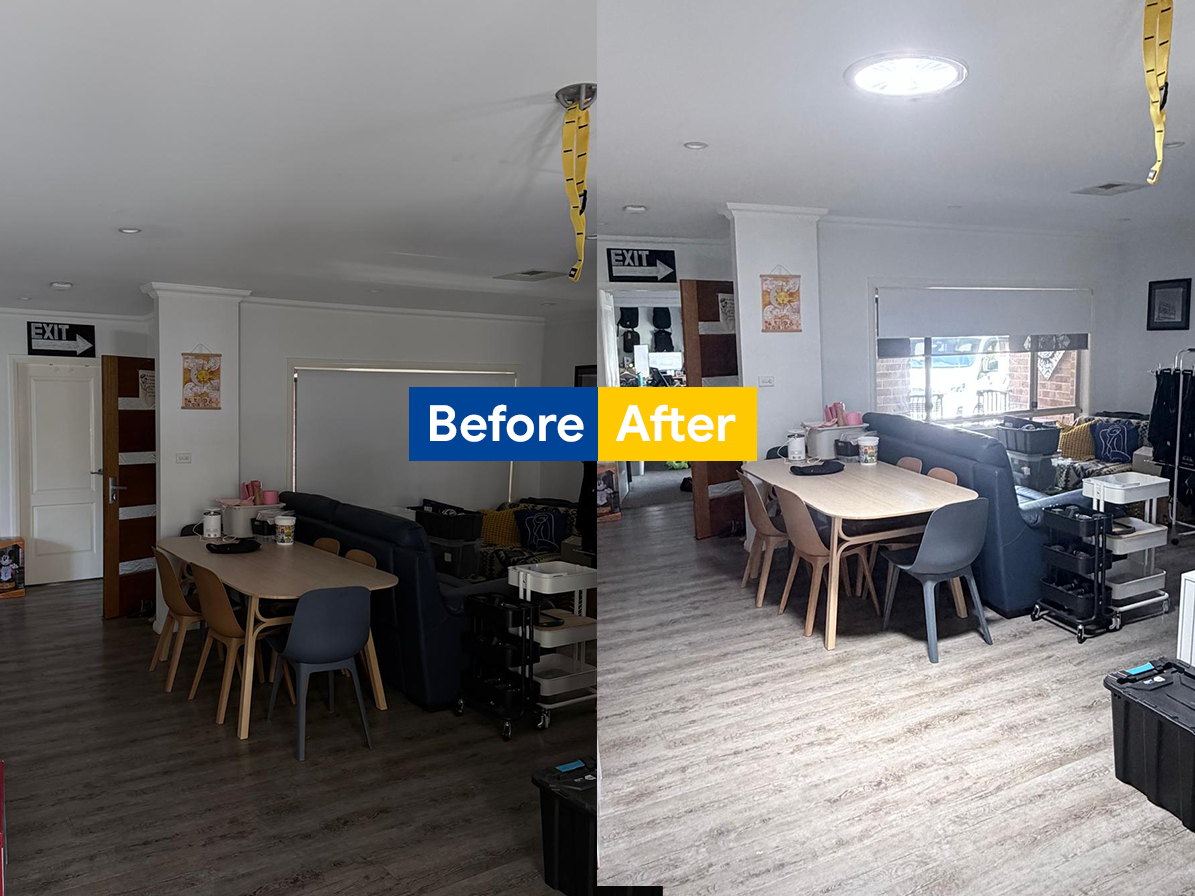
Once you know which system suits the roof-to-room connection, assess the space you want to brighten.
Measure the floor area. Multiply length by width. A 4m × 3m kitchen measures 12m², but its lighting needs also depend on existing windows and where the dark areas sit.
Consider ceiling height and layout. A tall ceiling, long passage or divided room needs closer attention to light distribution. Several well-positioned fittings may serve separate areas more effectively than one central fitting.
Compare MaxLED lumen output. Lumens describe the amount of visible light produced. The 250mm, 1,500-lumen option is a starting point for smaller spaces. The 400mm, 2,000-lumen option is worth comparing for wider rooms or areas needing more light.
Assess the complete installation. For MaxLight, review the tube route and available roof daylight. For MaxLED, review panel exposure, cable routing and fitting positions. Consider seasonal conditions as well as a bright summer afternoon.
MaxLight coverage figures do not apply to MaxLED. Keep dedicated task lighting where needed for cooking, reading and detailed work.
Bathrooms and laundries: consider an ML250 where a suitable tube route is available. A 250mm MaxLED is an alternative when roof-space constraints favour a cable connection.
Kitchens: compare an ML250 or ML400 against the area needing daylight and the proposed tube route. A 400mm MaxLED is another option where cable routing makes the desired ceiling position more practical. Explore our kitchen skylight options.
Hallways: consider the length and shape of the passage when deciding on quantity and spacing. MaxLED24 adds battery-supported lighting after dark. See our hallway skylight options.
Larger living areas: assess an ML550 or multiple MaxLight units where the tube routes suit. For a solar LED solution, plan MaxLED fittings around the separate living zones.
If you are looking for skylights or have any questions regarding skylight installations get in touch with the team at SolarBright.
Bring more natural light into your home with MaxLight tubular skylights, proudly designed and manufactured in Australia for local homes and conditions.
Find out more
Bring more natural light into your home with MaxLight tubular skylights, proudly designed and manufactured in Australia for local homes and conditions.
Find out more
Take a Look
Solar Battery Guides, Solar Panels Guides
Your solar system and battery should work together to suit your household’s electricity usage.…
SolarBright Guides, Solar Battery Guides, SolaX Triple Power Battery Guides
Price, warranty, safety and storage capacity are some of the biggest considerations when buying…
Roof Ventilation Guides, Solar Roof Ventilation Guides
Does your home become uncomfortable as the afternoon heats up? Perhaps the air conditioner…