Skylights Guides, Tubular Skylight Guides, Solar Skylight Guides
5 questions to ask when choosing skylight
Some rooms stay dark even on a sunny day. Your bathroom might have no…
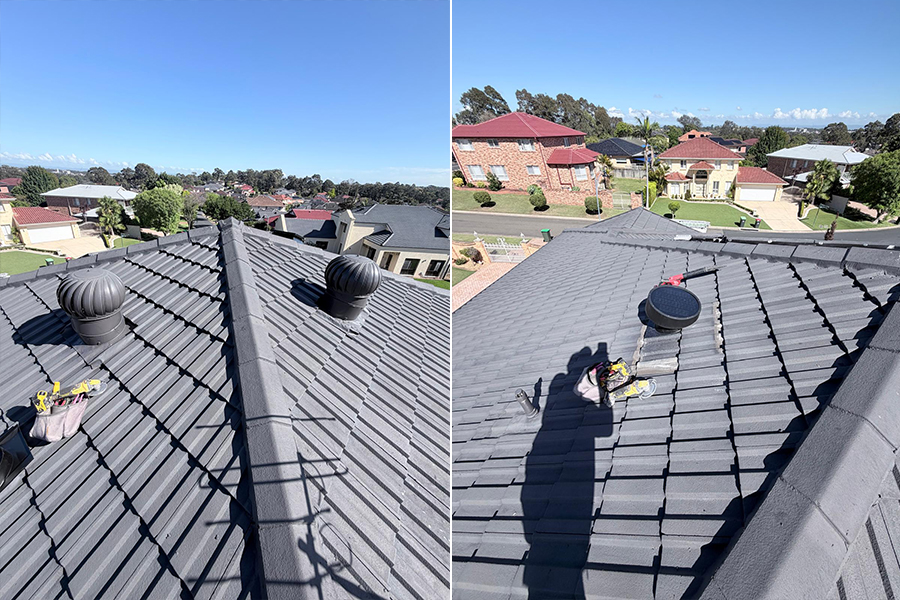
Quick answer: Solar roof ventilation is one of the most effective upgrades for an old whirlybird. Often called a solar-powered roof fan or solar whirlybird, it uses a small solar panel drives a fan that pulls hot air out of your roof space, so it works without wind, costs nothing to run and performs best on the hottest days. MaxBreeze is solar roof ventilation built for Australian homes.
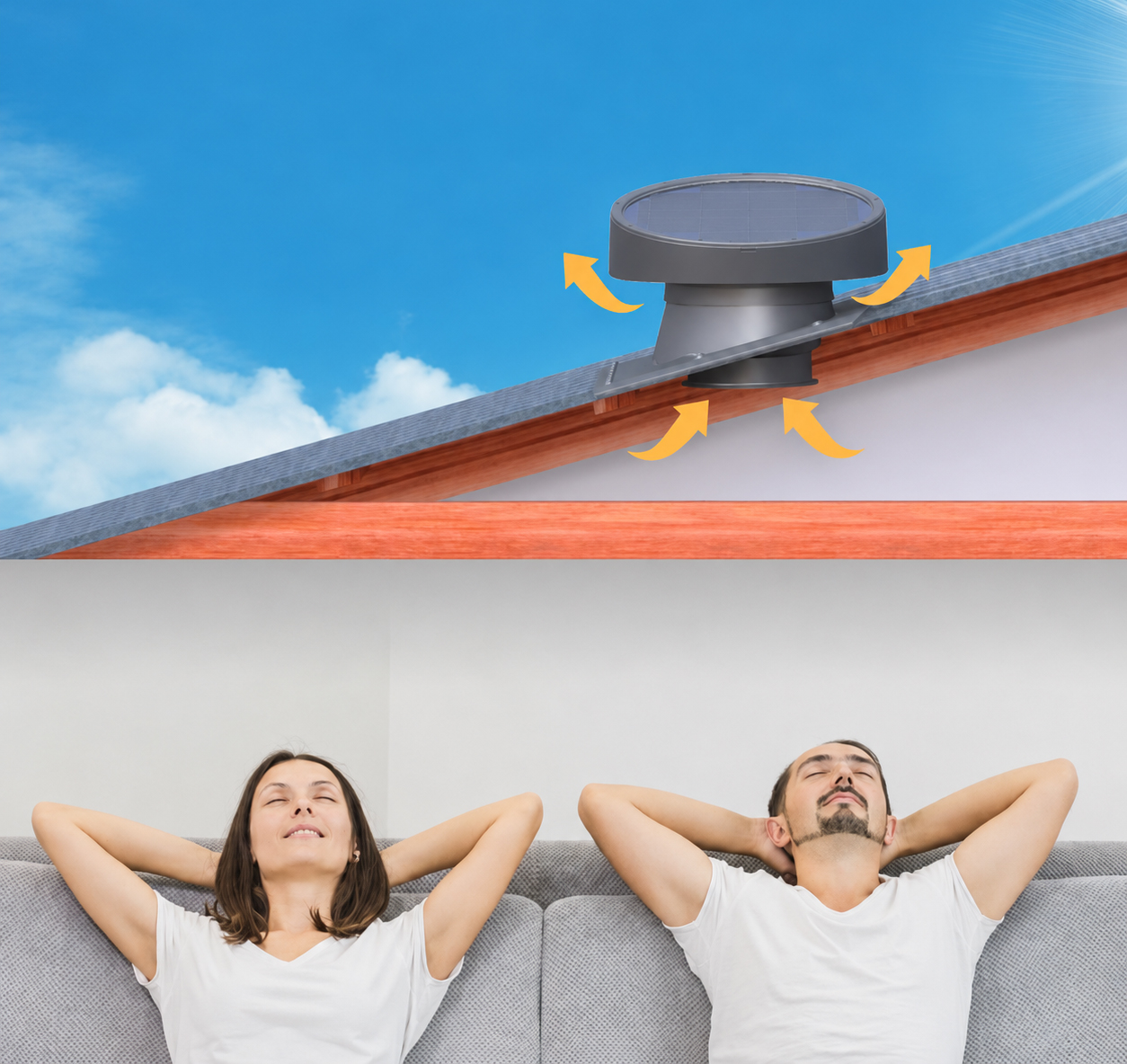
Solar roof ventilation is an active roof vent powered by the sun. A built-in solar panel runs a fan that extracts hot, stale air from your roof cavity and pushes it outside. Cooler air is then drawn in through your eaves and vents.
A whirlybird is passive. It relies on wind to spin it. Solar roof ventilation is powered, but it runs off free solar energy, so you get active airflow without wiring or power bills.
Same product, different names:
Whirlybirds have been on Aussie roofs for decades. They’re cheap and simple, but they have one big weakness: no wind, no airflow. On a still 38°C afternoon, when your roof space can be far hotter than outside, a whirlybird barely turns.
It’s time to replace yours if you notice any of these:
| Option | How it works | Running cost | Works on still days? | Best for |
| New whirlybird | Wind spins the turbine | $0 | No | Tight budgets, windy sites |
| Mains-powered roof fan | Electric motor extracts air | Adds to your power bill | Yes | Large roofs, needs an electrician |
| Ridge or eave vents | Passive airflow through gaps | $0 | Partly | New builds, re-roofs |
| Solar roof ventilation (MaxBreeze) | Solar-powered fan actively extracts hot air | $0 | Yes, runs hardest in full sun | Most Australian homes |
Another whirlybird is the cheapest fix up front, but you’re buying the same problem again. Most hot days have little wind.
A mains-powered roof fan moves plenty of air, but it needs an electrician, wiring through the roof and adds to your power bill.
Ridge or eave vents help as part of a whole-roof design, but on their own they don’t actively remove heat.
Solar roof ventilation gives you the best of both: active airflow like a powered fan, with zero running costs like a whirlybird.
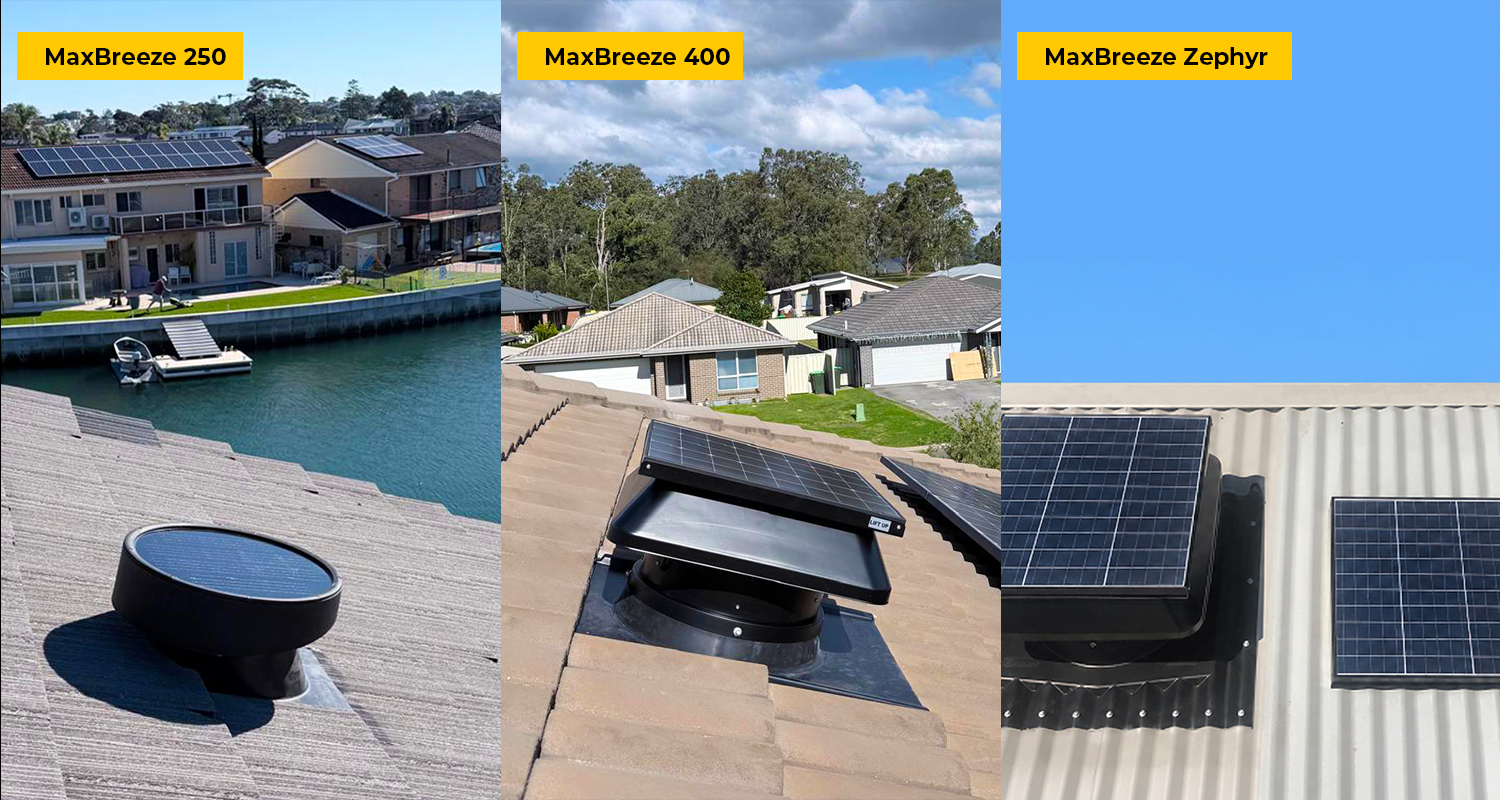
MaxBreeze is a solar roof ventilation system from SolarBright designed in Australia. It uses a solar-powered fan to draw hot air out of your roof space, even on still days.
MaxBreeze is designed to replace whirlybirds and give your home real, active roof ventilation powered by the sun. Here is why MaxBreeze suits Australian homes better:
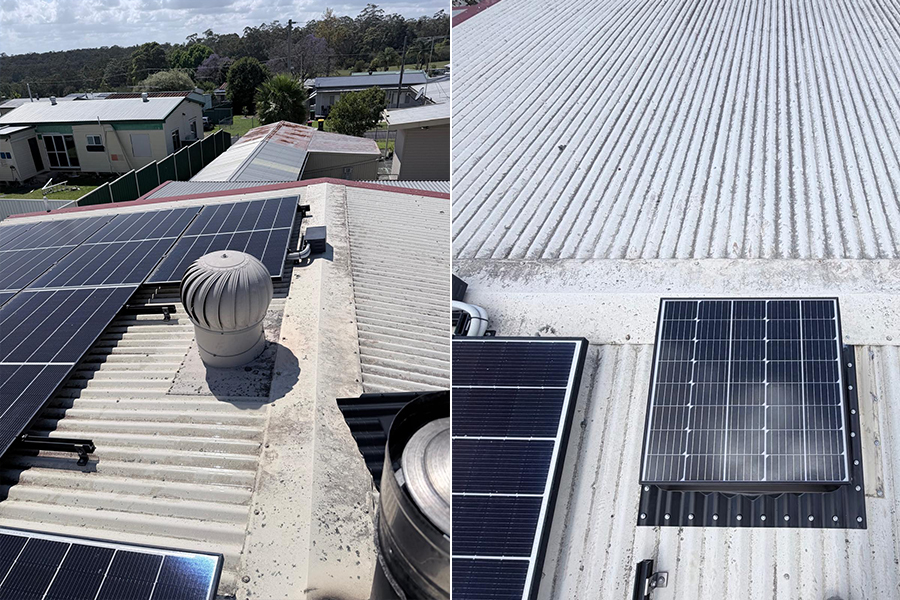
Yes. MaxBreeze is fitted into the same hole your whirlybird already uses, so there’s no need to cut a new opening in your roof. The old whirlybird comes off, MaxBreeze goes on, and the area is sealed with the right flashing for your roof type. It’s classed as minor work, not a major roof job, and there’s no extra cost or rework involved.
The one thing your installer checks is the size of the existing hole. MaxBreeze fits straight in where the whirlybird opening is smaller than the MaxBreeze unit. If your current whirlybird is larger than MaxBreeze, it can’t go into the same hole, and your installer will let you know before any work starts.
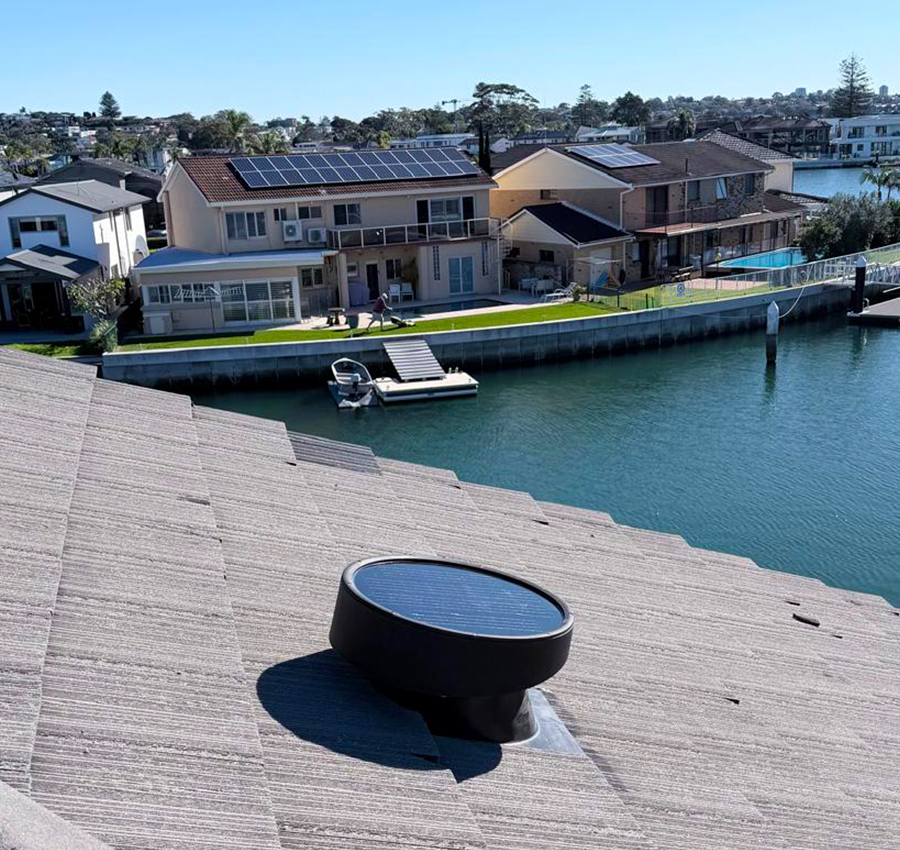
It depends on your roof area, pitch and how hot your roof space gets. Because solar roof ventilation actively extracts air, you’ll often need fewer units than whirlybirds for the same or better result.
The number of fans you need depends on your roof area, roof pitch and the MaxBreeze model you choose. A solar roof fan actively draws hot air out of your roof space, even on still days.
As a starting point, one MaxBreeze MB250 can suit a 100 m² low-pitch roof, while one MB400 can suit a low-pitch roof of up to 200 m². Here’s how the recommended number of fans changes with roof size and pitch.
| Roof area | MB250 below 18° | MB250 above 18° | MB400 or Zephyr below 18° | MB400 or Zephyr above 18° |
| 100 m² | 1 | 2 | 1 | 1 |
| 200 m² | 2 | 3 | 1 | 2 |
| 300 m² | 3 | 3 | 2 | 2 |
Not sure? Book a free roof ventilation assessment.
Yes. Solar roof ventilation, solar-powered roof fans, solar whirlybirds and solar roof vents all describe a roof vent with a solar-driven fan that extracts hot air from your roof space.
For most homes, yes. A whirlybird only works when there’s wind. Solar roof ventilation actively extracts hot air whenever the sun is out, with no running costs.
It runs at reduced speed in low light. But your roof heats up most in strong sun, which is exactly when a solar roof fan runs hardest.
It costs more up front than a new whirlybird, but you get active ventilation that doesn’t depend on the weather, and it’s free to run.
No. MaxBreeze is solar powered and self-contained, so there’s no connection to your home’s power.
Not when it’s installed properly with the right flashing for your roof type. A new install often fixes leaks caused by old, worn whirlybird flashing.
Stop relying on the wind to cool your home. Upgrade to MaxBreeze solar roof ventilation and get powerful, sun-driven airflow that works hardest on the hottest days, at zero running cost.
Book your free consultation today and find the right MaxBreeze model for your home.

MaxBreeze can move over 20 times more air than whirly-birds. Australian Owned & Designed solar roof ventilators.
Find out more
MaxBreeze can move over 20 times more air than whirly-birds. Australian Owned & Designed solar roof ventilators.
Find out more
Take a Look
Skylights Guides, Tubular Skylight Guides, Solar Skylight Guides
Some rooms stay dark even on a sunny day. Your bathroom might have no…
Roof Ventilation Guides, Solar Roof Ventilation Guides
Yes, solar roof vents really work. They use solar energy to power a fan…
Skylights Guides, Tubular Skylight Guides, Solar Skylight Guides
Choosing a skylight involves more than matching a fitting to your room’s floor area.…