SolarBright Guides, Solar Battery Guides, SolaX Triple Power Battery Guides
7 reasons to choose a SolaX Triple Power battery
Price, warranty, safety and storage capacity are some of the biggest considerations when buying…
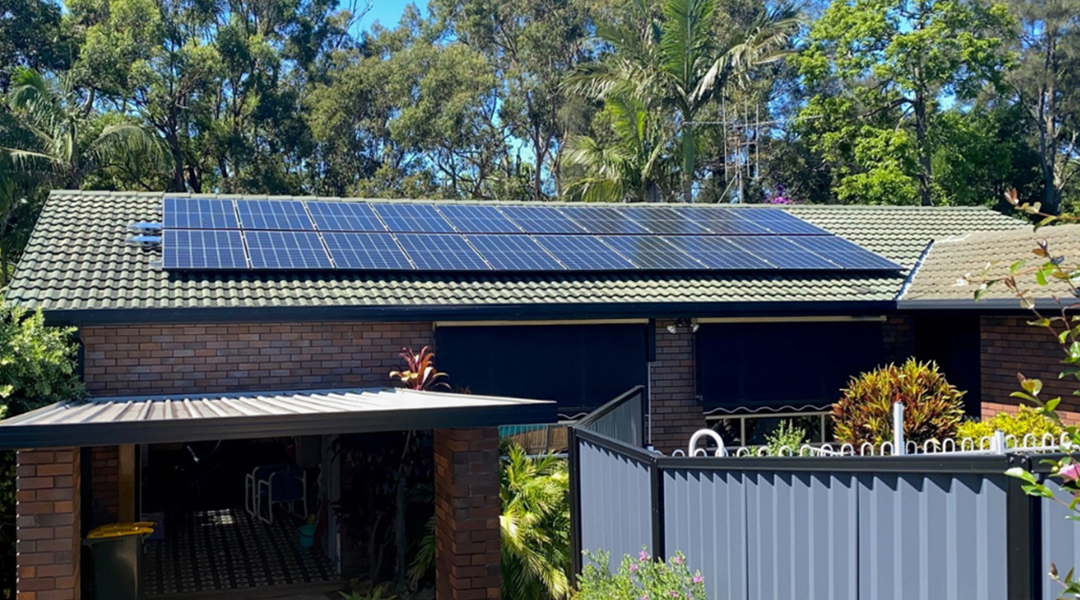
Your solar system and battery should work together to suit your household’s electricity usage. The panels need to generate enough electricity to run your home during daylight and provide surplus energy for storage. Your solar battery should have enough capacity to cover a substantial share of your evening and overnight electricity use.
Understanding this relationship helps you choose a system that suits your home. Let’s look at how it works, using a 13.2kW solar system and Tesla Powerwall 3 in Sydney as an example.
Solar system size is measured in kilowatts (kW). It describes the combined rated power capacity of your solar panels.
Battery capacity is measured in kilowatt-hours (kWh). It describes how much energy the battery can store for later use.
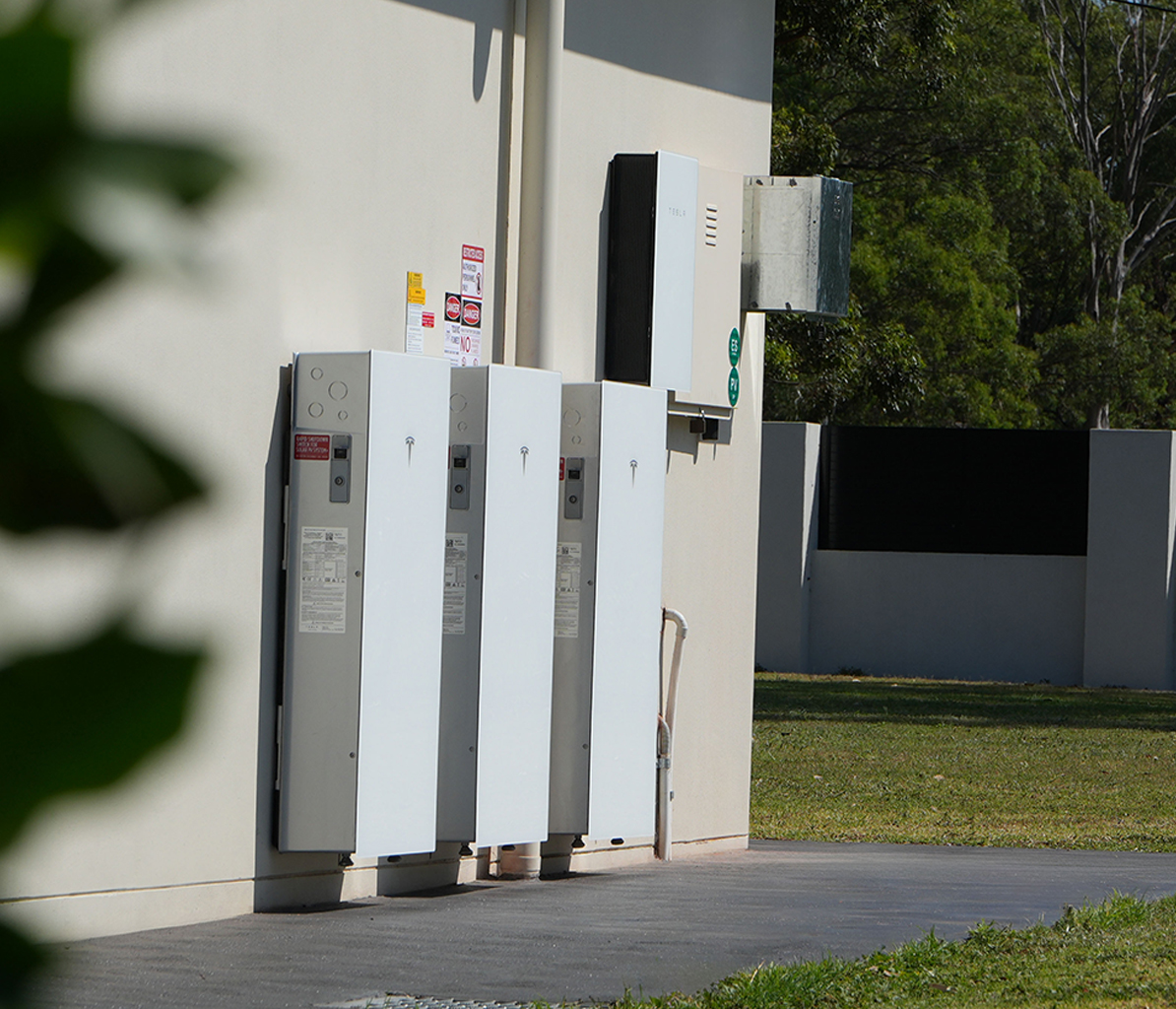
For example, the Tesla Powerwall 3 provides 13.5kWh of usable storage. Pairing it with 13.2kW of solar does not mean the numbers need to match. They measure different things.
What matters is how much electricity your panels generate across the day, how much your home uses directly and how much remains to charge the battery.
As a general guide, Sydney receives around 4.5 peak sun hours per day, averaged across the year. Peak sun hours represent the equivalent amount of strong sunlight received throughout the day. Your panels can generate electricity over a longer daylight window, with output rising and falling as conditions change.
Typical Sydney generation is approximately 4kWh per day for every 1kW of installed panels, averaged over a year. Using that benchmark:
13.2kW of solar × 4 = approximately 53kWh of electricity per day.
Generation is generally higher in summer and lower in winter. Roof orientation, shading, weather and inverter limits also affect the result.
For a good sunny spring or summer day, let’s use 60kWh of generation as a practical example. This is an illustrative figure rather than a guaranteed daily output.

Imagine your 13.2kW system generates 60kWh during the day. Your home uses 20 kWh directly from solar to run appliances such as the fridge, washing machine, pool pump and air conditioning.
That leaves around 40kWh of surplus solar before charging losses.
| Energy flow | Example |
| Total solar electricity generated | 60kWh |
| Electricity used directly during daylight | 20kWh |
| Surplus available before charging losses | 40kWh |
| Powerwall 3 storage capacity | 13.5kWh |
In this example, there is enough surplus to fill a Powerwall 3 from empty, allowing for charging losses. Remaining electricity can be exported, subject to export limits.
However, if your daytime consumption increases, less energy remains for charging. Running air conditioning, charging an electric vehicle and heating water can all change the balance.
Once the sun goes down, your battery can supply stored electricity to your home.
For example, your household might use:
That is 10 kWh after sunset. A fully charged Powerwall 3 could supply this demand, depending on its reserve setting, conversion losses and power limits.
The battery can also help during daylight. If clouds reduce solar output to 1kW while your home needs 3kW, the battery can supply the remaining 2kW when sufficient charge is available and its settings allow.
The value comes from storing surplus solar and then using that energy when your panels cannot meet demand.
On a lower-generation day, your panels might produce 25kWh while your home uses 20kWh directly during daylight. Only 5kWh remains for charging, before losses.
A larger battery provides more storage space, but your solar surplus remains the same. Regularly filling it may require additional solar generation or grid charging, where supported.
If your household uses around 10kWh after sunset, a 13.5kWh battery may cover a substantial share of that demand.
If you regularly use 20kWh overnight, one Powerwall 3 cannot cover everything from a single charge. Additional storage may be useful, provided enough energy is available to charge it.
More storage can support higher consumption, longer backup duration or future needs. Its value depends on how much of that capacity you will use.
When comparing solar batteries, look at your available solar surplus alongside your evening and overnight consumption.
A suitable solar and battery recommendation should consider:
Your bills provide a starting point. Smart meter data can give a clearer picture of daytime and overnight demand.
At SolarBright, we assess your electricity usage, roof conditions and energy goals to recommend solar and battery sizes that work together.
Whether you need a new solar panel installation or want to add storage through our solar battery installation service, our team can help you understand your options.
Explore our solar and battery packages. We can also tailor a package to suit your home and energy needs.
Get in touch with SolarBright for expert advice on the right solar system and battery size for your home.

Take a Look
SolarBright Guides, Solar Battery Guides, SolaX Triple Power Battery Guides
Price, warranty, safety and storage capacity are some of the biggest considerations when buying…
Roof Ventilation Guides, Solar Roof Ventilation Guides
Does your home become uncomfortable as the afternoon heats up? Perhaps the air conditioner…
Solar Battery Guides, Solar and Battery Packages Guides, NSW Solar Rebates and Incentives
If you’re in the market for a solar battery, solar system, or solar and…