
Solar Battery Guides, Solar and Battery Packages Guides, NSW Solar Rebates and Incentives
Are Solar and Battery Rebates Going Down in 2027?
If you’re in the market for a solar battery, solar system, or solar and…
Does your home become uncomfortable as the afternoon heats up? Perhaps the air conditioner is running, but your rooms still feel warm well into the evening.
Part of the problem could be above your ceiling.
During summer, your roof absorbs heat from the sun. As temperatures rise inside the roof cavity, that heat can transfer into your living areas and make it harder to keep your home comfortable.
MaxBreeze solar roof ventilation helps address this problem by actively extracting trapped hot air from your roof space. With solar-powered operation, automatic thermostat control and options for ventilation after sunset, MaxBreeze offers a practical way to manage summer roof heat.
Your roof is exposed to direct sunlight for much of the day. As the roofing materials become hotter, the space beneath them also heats up.
When airflow is limited, hot air can accumulate inside the roof cavity. Heat can then transfer through the ceiling into the rooms below, particularly where insulation is inadequate.
This can contribute to rooms becoming warmer throughout the afternoon and remaining uncomfortable into the evening.
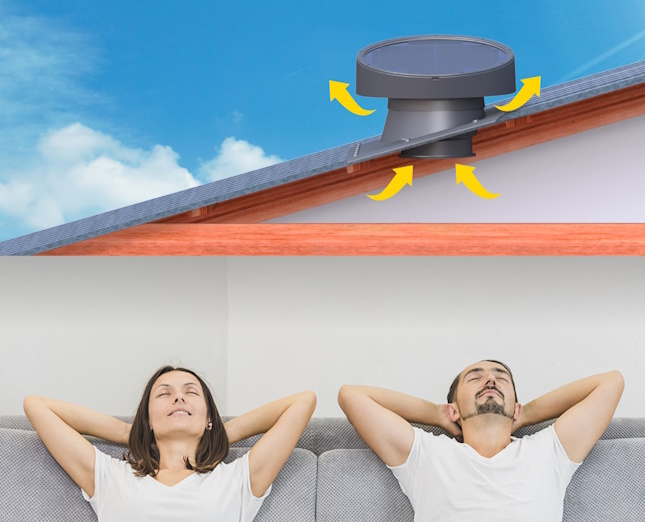
Roof ventilation systems help manage this build-up by moving air through the roof cavity. Effective ventilation needs both an outlet for hot air and suitable intake openings for replacement air.
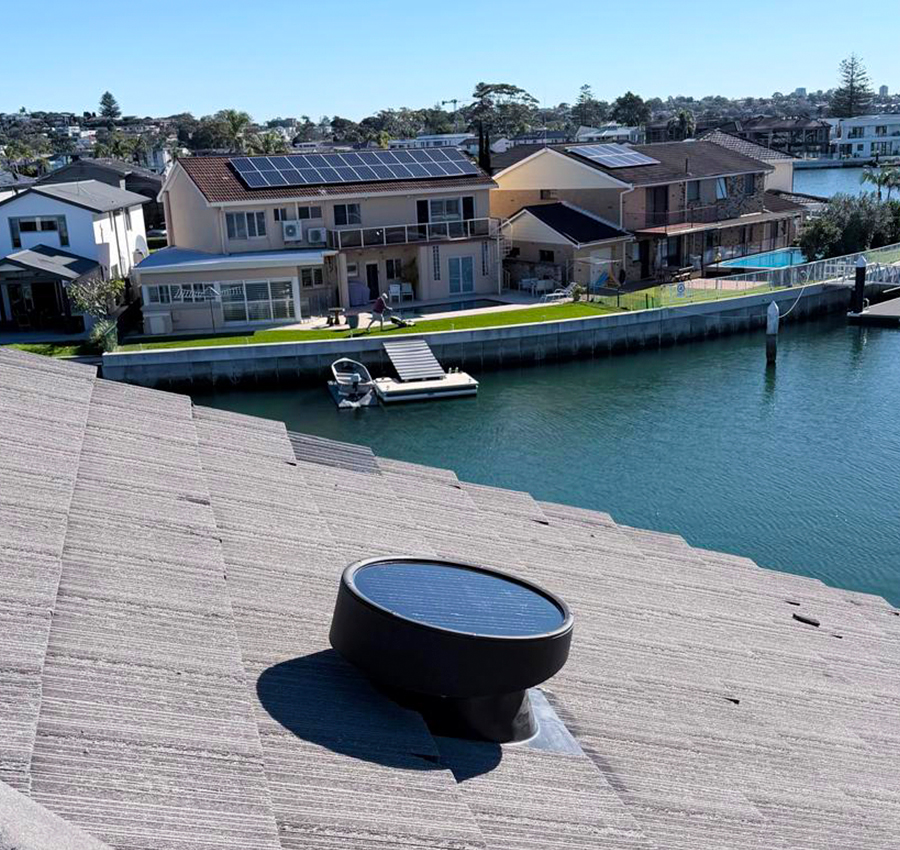
MaxBreeze tackles heat where it builds up – inside your roof cavity.
Its solar-powered extraction fan draws hot air outside, helping improve airflow above your ceiling.
Here is how it can help your home during summer.
Without adequate ventilation, your roof space can hold a substantial amount of heat during the day.
MaxBreeze uses a powered fan to extract this hot air through a roof-mounted vent. As air leaves, replacement air enters through suitable intake vents, helping move accumulated heat outside.
This creates an airflow path through the roof cavity, giving trapped heat a way out.
A hot roof cavity can add to the heat entering your living areas. By helping reduce roof-space temperatures, MaxBreeze can support more comfortable conditions inside your home.
The difference will depend on your roof construction, insulation, existing airflow and local weather. Solar roof ventilation works best as part of a considered approach to home comfort, alongside suitable insulation and shading.
When heat continues to enter through the ceiling, your air conditioner has more heat to remove.
MaxBreeze helps manage one source of that heat by ventilating the roof cavity. This can support your cooling system and may reduce cooling demand.
Actual electricity savings will vary with your home, the weather and how you use your air conditioner.
MaxBreeze has a dedicated solar panel that supplies electricity to its fan during daylight hours.
This allows the system to extract roof heat using solar energy, without drawing mains electricity for daytime solar operation. Performance depends on available sunlight and the system’s operating conditions.
MaxBreeze includes thermostat control, allowing the fan to operate when the roof cavity reaches its operating temperature.
This means you do not need to switch it on manually every hot day. Selected MaxBreeze Plus models also offer adjustable thermostat settings, fan speed and remote control for greater flexibility.
Your roof space may still need ventilation when daylight fades.
The MaxBreeze MB400 Zephyr includes a battery that stores solar energy for operation beyond daylight hours. Its evening operating time depends on available battery charge and operating conditions.
Selected other MaxBreeze models offer night operation using an AC power connection. These options are worth discussing if lingering evening heat is a concern.
Along with heat, humid air can accumulate inside a roof cavity. Improving airflow helps remove moisture-laden air and can reduce moisture build-up.
Selected MaxBreeze PLUS models include an adjustable humidistat, allowing the system to respond to elevated humidity as well as temperature.
Ventilation is one part of moisture management. Roof leaks, incorrectly discharged bathroom exhausts and other moisture sources also need to be identified and addressed.
The right system depends on more than the size of your house. Roof pitch, cavity layout, intake ventilation and operating hours all affect the selection.
The MaxBreeze range includes:
Selected Plus versions provide additional features such as remote control, adjustable fan speed, thermostat settings and humidity control.
A roof assessment helps determine the appropriate model, number of units and installation positions. Larger or divided roof cavities may need more than one ventilator to achieve suitable airflow.
Even well-designed roof ventilation systems need the right installation to perform effectively.
Your installer should consider solar panel exposure, fan placement, roof compatibility and the availability of replacement air. Without adequate intake ventilation, an extraction fan may struggle to move air through the roof space as intended.
SolarBright can assess these factors and recommend a MaxBreeze setup suited to your home, including any intake ventilation requirements.
Say goodbye to summer heat build-up. Contact SolarBright for expert advice on the best solar roof ventilation system for your home.
MaxBreeze can move over 20 times more air than whirly-birds. Australian Owned & Designed solar roof ventilators.
Find out more
MaxBreeze can move over 20 times more air than whirly-birds. Australian Owned & Designed solar roof ventilators.
Find out more
Take a Look
Solar Battery Guides, Solar and Battery Packages Guides, NSW Solar Rebates and Incentives
If you’re in the market for a solar battery, solar system, or solar and…
SolarBright Guides, Roof Ventilation Guides
Mould is a common problem in Australian homes, particularly where moisture, humidity and poor…
Solar Panels Guides
Solar panels are designed to provide reliable electricity for many years. However, like any…